The following awardees were honored at the 2025 IS-MPMI Congress held in Cologne, Germany.
Outstanding Achievement Award
This award recognizes an investigator who has a high international reputation as a research leader for groundbreaking and original research in the area of molecular plant-microbe interactions. The award also recognizes their strong commitment to one or more activities that advance the IS-MPMI field, including teaching, mentoring, educational outreach, international collaborations, service to the community, and/or advancing diversity, equity, inclusion and belonging.
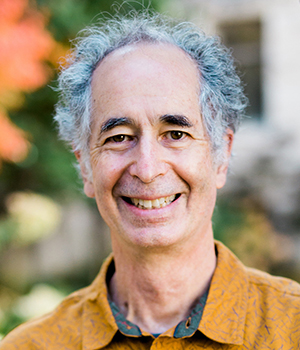 Roger Innes holds the Class of 1954 Professorship in Biology at Indiana University-Bloomington. He received his Ph.D. in Molecular, Cellular and Developmental Biology at the University of Colorado-Boulder, and completed Post-doctoral research at the University of California-Berkeley where he helped develop Arabidopsis as a model system for studying molecular plant-microbe interactions. He is an elected fellow of the American Association for the Advancement of Science and the American Academy of Microbiology, and is the immediate Past President the International Society of Molecular Plant-Microbe Interactions. He also served as President of the North American Arabidopsis Steering Committee (NAASC). His current research focuses on molecular mechanisms underlying the plant immune system and development of novel strategies for engineering disease resistant crops. Over the course of his career, Dr. Innes has contributed to several seminal discoveries in plant-microbe interactions. These include the discovery that legumes secrete isoflavanoids from their roots to induce expression of nodulation genes in Rhizobium, the identification of the first avirulence proteins in Pseudomonas syringae that are recognized by Arabidopsis (AvrRpt2, AvrB and AvrPphB), the identification and cloning of the Arabidopsis NLR genes RPM1 and RPS5, which were among the first NLR genes cloned from plants, and development of the ‘guard model’ for NLR protein function, whereby NLR proteins sense modifications of host proteins targeted by pathogen effectors. Most recently, his group has shown that plants secreate extracellular vesicles and RNA in response to pathogen infection, with the surprising discovery that plant leaves are coated by RNA, which is likely to impact the microbes that colonize leaf surfaces.
Early Career Achievement Award
This award recognizes an outstanding investigator who is known internationally as an emerging research leader in the area of molecular plant-microbe interactions.
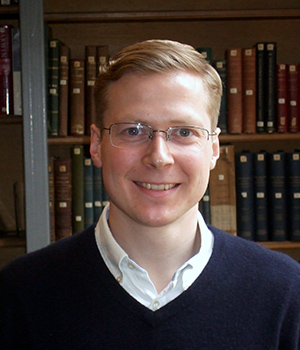
Sebastian Eves-van den Akker received his B. Sc. in Biology (2007-2010) from the University of Leeds, and his Ph. D. in Plant-Pathology (2010-2014) from the University of Leeds (with Prof. Peter Urwin) and the James Hutton Institute (with Prof John Jones). In late 2014, Sebastian was awarded an Anniversary Future Leaders Fellowship from the Biotechnology and Biological Sciences Research Council and moved to the University of Dundee (with Prof. Paul Birch) and the John Innes Centre (with Prof. Mark Banfield). In 2018, he moved to the University of Cambridge to establish the Plant-Parasite Interactions group in the Department of Plant Sciences, and was made a Fellow of King’s College Cambridge. In 2024 he was made Professor of Biotic Interactions.
From undergraduate to Professor, Sebastian has worked on one problem: plant-parasitic nematodes. Today, the lab tends to look at questions from a genetic perspective, investigating the genes that control the dialogue between the two kingdoms. The sustaining interest has been that the outcome of this communication dictates plant organ development, animal sex determination, and ultimately human food insecurity.